
A strong portfolio should prove that the designer can solve your type of problem, explain their decisions, create a consistent system and deliver usable files. When searching for a “graphic designer near me,” do not choose by location or attractive mockups alone. Review the work for clear evidence of relevant experience, individual contribution, production knowledge and a process that fits your project.
Begin with work that relates to your needs.
Decide what you need before reviewing individual projects. A designer may be excellent at social campaigns but have little packaging experience. Another may specialize in identities without regularly handling brochures or presentations.
Look for similar deliverables, audiences, communication problems or levels of complexity. The industry does not need to match yours exactly. A restaurant and a professional-services company may look different, but both can require clear hierarchy and a visual system that works across several materials.
Look for context, decisions and evidence.
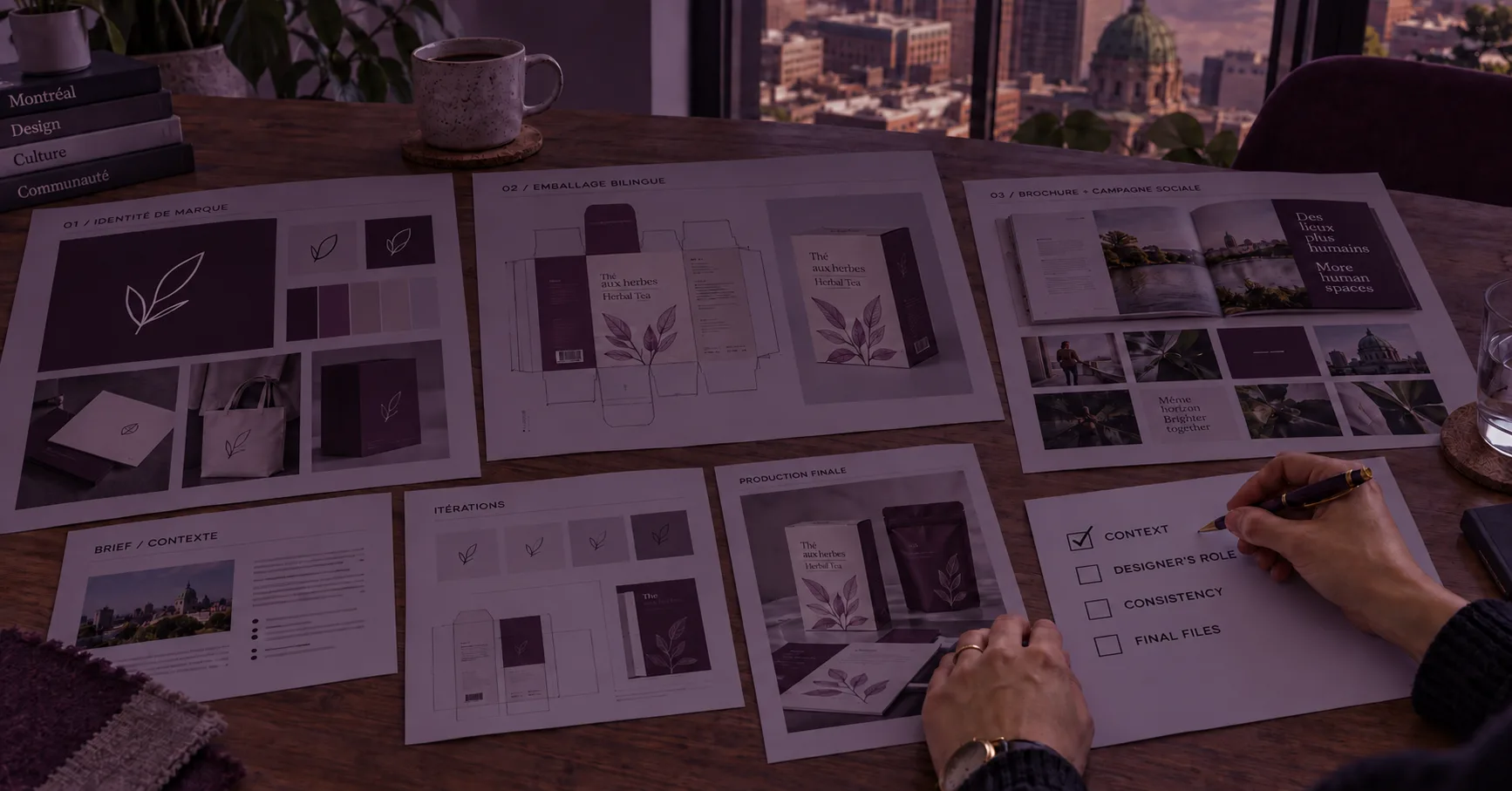
A polished image shows the result. A useful case study explains the client or business, audience, goal, important constraints, designer’s role and final deliverables. This does not require a long explanation or confidential information.
The Association of Registered Graphic Designers includes client context, objectives and preferred outcomes in its portfolio criteria. Those details help a potential client judge whether the work answered a real need instead of simply following a visual trend.
| Strong portfolio evidence | Attractive presentation without enough evidence |
|---|---|
| The project goal and audience are clear. | Only the client name and final mockups appear. |
| Important constraints and decisions are explained. | The description relies on vague words such as modern or creative. |
| The designer’s role is identified. | Teamwork appears without credits. |
| Related materials form a consistent system. | Each item looks good alone but feels disconnected. |
| Results use a documented outcome or specific client feedback. | Broad claims appear without support. |
Confirm what the designer actually created.
Projects may involve strategists, writers, illustrators, photographers, developers or internal teams. Collaboration is normal, but the designer should identify what they personally created or decided. Ask whether they developed the visual direction, designed the layouts, adapted an existing identity or prepared production files.
Concept work can show skill and creative range, but it should be labeled honestly. Stock photography, templates, purchased mockups and AI-assisted assets should not be presented as original work. Mockups are presentation tools, so judge the identity, packaging panel, campaign system or layout shown inside them. If the contribution is unclear, ask where the designer’s work begins and ends.
Check whether the system holds together.
One logo or social post does not prove that a designer can build a usable visual system. Check whether typography, color, imagery, spacing and hierarchy remain connected across different formats.
The Eats Instagram campaign shows how one direction can carry across a group of social posts. The Miel Galatée bi-fold brochure shows how information is organized within a defined print format. Consistency does not mean copying one layout repeatedly; each piece should suit its purpose while remaining recognizable.
Make sure the work can be produced and delivered.
If your project includes print, ask about bleed, trim, color modes, image resolution, folds and printer specifications. For digital work, ask about dimensions, export formats, file size, accessibility needs and how final assets will be organized.
You do not need to inspect every technical setting during the first conversation. Look for enough evidence that production is part of the process rather than an afterthought. Multiple pages, packaging panels, final printed pieces and clearly listed deliverables can all help.
Plan for French and English from the beginning.
Montréal and Quebec projects may require French and English materials. This affects more than translation because text length can change spacing, hierarchy, packaging panels, signage and the number of versions needed.
The Office québécois de la langue française provides specific requirements for French on public signage, commercial advertising, products and packaging. If your project involves these materials, ask how the designer will manage confirmed translations, text expansion, hierarchy and final review. A designer can plan the visual system, but businesses should verify the rules with the Office québécois de la langue française before production.
Evaluate communication and the right way to collaborate.
Specific testimonials can support the portfolio when they mention clear communication, responsiveness, problem-solving or usable final files. Ask how the designer handles the brief, feedback, approvals and changes, especially when several people will review the work.
A Montréal-based designer may be useful for on-site workshops, physical products, local printing, photography or bilingual coordination. Remote collaboration can work equally well when the scope, files, decision-makers and communication process are clear. Choose based on what the project requires, not distance alone.
Ask focused questions before hiring.
Choose two or three relevant projects and ask:
- What was the business or communication goal?
- Which parts did you personally complete?
- What constraints affected the design?
- How did the system adapt across deliverables?
- What files did you provide at the end?
- How would my project be similar or different?
Clear, specific answers are more useful than a polished sales pitch. If the work appears suitable, review the designer’s graphic design services to confirm that the deliverables fit. For planning, read How Much Does Graphic Design Cost in Canada? and What to Prepare Before Your First Call With a Graphic Designer.
A portfolio does not need to answer every question. It should provide enough evidence to decide whether the designer’s experience, process, production knowledge and communication fit your project.